Who are the Sicilians?
Sicily has always been under the rule of foreign powers. For over 2500 years, it has been systematically colonized and has never tasted the bittersweet flavour of freedom won through the powerful means of a revolution against a rebellious master (except for the War of the Vespers, which began as a popular uprising on Easter Monday in 1282 when a French soldier decided to search a Palermo woman for weapons, offended her modesty, and enraged some locals into a spontaneous revolt – from Best of Sicily Magazine; the revolt lasted seven years during which Sicily was formally independent from a foreign ruler). The Greeks were the first, then the Romans, the Vandals and the Goths, the Byzantines, the Arabs, the Normans, the Swabians, the Angevins, the Aragonese, the Savoys, the Austrians, the Bourbons, until 1860 when Garibaldi liberated the island from Bourbon rule… or maybe not.
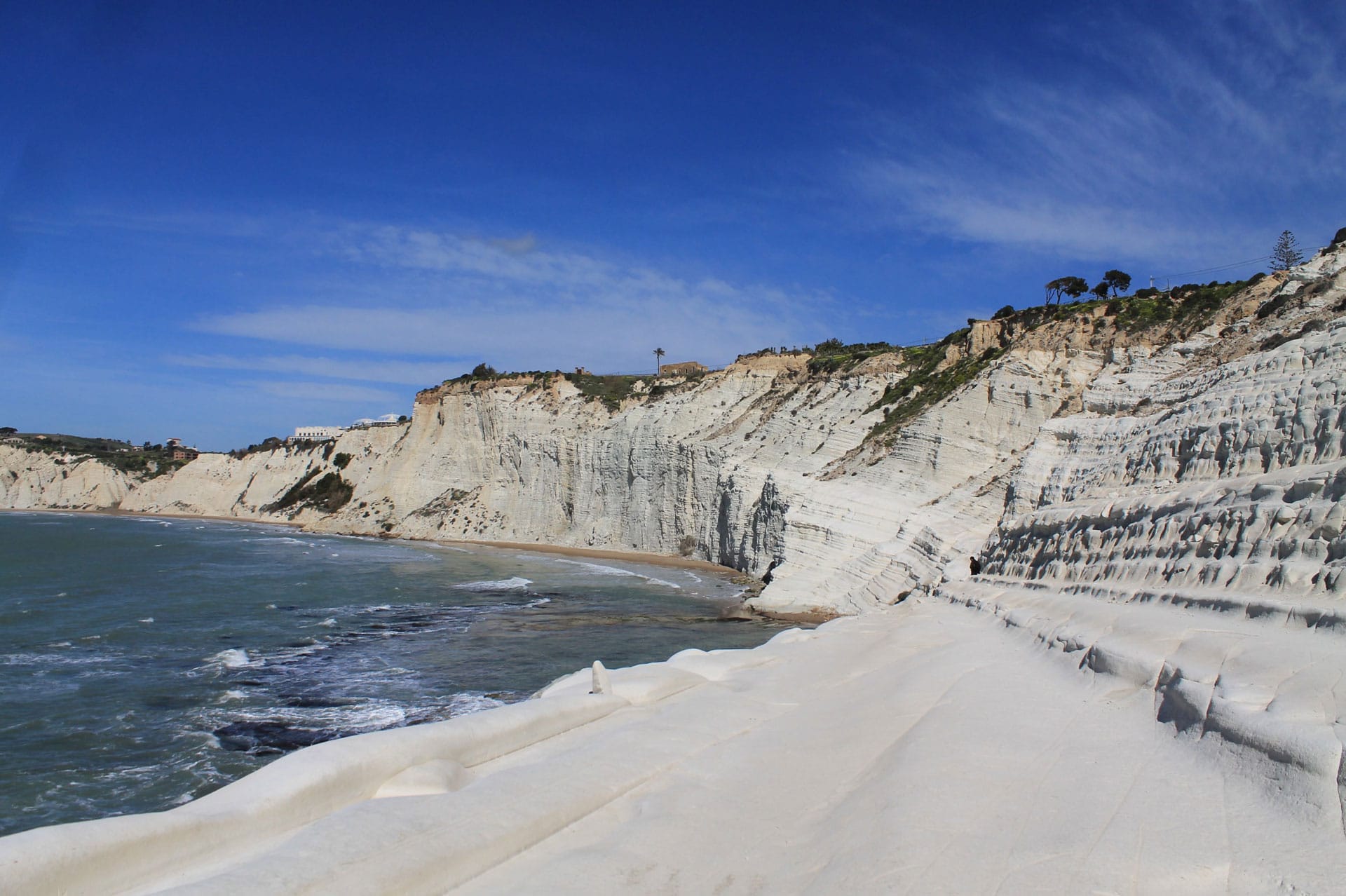
But what does it really mean to be Sicilian? Who were the Sicilians during centuries of exploitation and foreign domination? Sicily was the “Granary of Rome” and the nurse from which the Romans fed, but it was also the largest island in the Mediterranean and many would swear the most beautiful. Like the monuments representing the multiculturalism of our history, Sicilians are made of layers. Years ago, in Australia, I walked through magnificent ancient rock formations, once submerged, on which you could easily recognize the layers of passing years: ripples on their surface showed the slow retreat of the water in which they were once submerged. Sicilians have been deprived of their lands and traditions through years of colonization but still retain all the signs of each of them.
Often I get the impression that the passage of time is like the advancing and retreating of tides that bring or leave behind debris, colorful shells, and precious objects; our oldest buildings do the same, revealing layers of history, habits, and traditions.
Marveling at the Cathedral of Ortigia, the historic center of Syracuse, one might overlook the fact that beyond its Baroque façade, rebuilt in the 18th century after a terrible earthquake, the ancient columns of the original Greek temple dedicated to Athena in the 5th century B.C., are still miraculously standing on its side. The battlements above these ancient columns testify to the period when the church was transformed into a mosque by the conquering Arabs. The layers of history are visible here even to the inattentive eye.
Sicily is like a gift that cannot be hastily opened; if you do, you may not appreciate its beauty, but if you have the patience to slowly work your fingers through its outer surface, it will reveal its charm.
“Who are the Sicilians?” is an extract from the book “A fork in the road – Cycling around Sicily” written by our guide Daniela Petracca.Do you want to know us better? Click here! old town of Siracusa, you can overlook the fact that beyond its baroque façade, rebuilt in the eighteenth century after a terrible earthquake, the ancient pillars of the original Greek temple dedicated to Athena in the 5th century BC, still stand miraculously on its lateral side. The crenelations above these ancient columns testify to the time when the church was turned into a mosque by the conquering Arabs. Layers of history are visible here even to the inattentive eye.
Sicily is like a present which cannot be unwrapped in a hurry; if you do, you might fail to appreciate its beauty but if you have the patience to slowly work your fingers through its outer surface, it will reveal its allure.
Excerpt from the book “A fork in the road – Cycling around Sicily” written by our guide Daniela Petracca
© 2026 Ciclofree s.r.l. - P.I. 01997310899